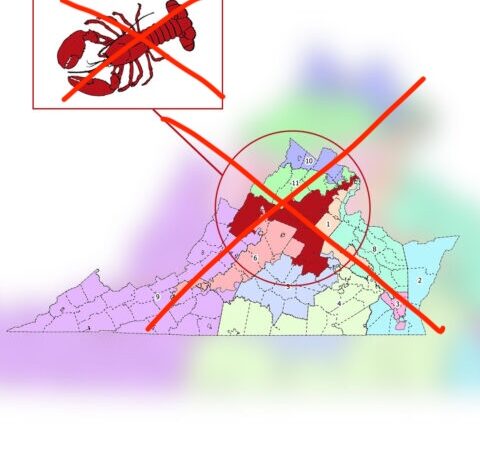
In a major ruling with significant implications for Virginia’s congressional delegation ahead of the 2026 midterms, the Supreme Court of Virginia today struck down a controversial constitutional amendment that voters narrowly approved in a special referendum on April 21, 2026. The amendment would have allowed the Democrat-controlled General Assembly to redraw congressional districts mid-decade, potentially shifting the state’s U.S. House map from a 6-Democrat, 5-Republican split to a heavily Democratic 10-1 advantage.
If Abigail Spanberger and Virginia Democrats had paid attention my October 2025 AG’s Opinion that made clear this scheme was unconstitutional and illegal, they could have saved more than $70 million, countless headaches, and months of obnoxious television ads defending the… https://t.co/787vvZRHZD
— Jason Miyares (@JasonMiyaresVA) May 8, 2026
The court upheld a lower-court ruling from Tazewell County Circuit Judge Jack C. Hurley, who had found the amendment process unconstitutional on procedural grounds and blocked certification of the referendum results. The Supreme Court’s decision means the new maps never take effect, and Virginia’s existing congressional districts—drawn after the 2020 census—will remain in place for the rest of the decade.
The Virginia Supreme Court has affirmed what we believed from the beginning — the hastily drawn egregious gerrymander was unconstitutional. This ruling is a victory for democracy and ensures Virginians have fair representation in Congress.
— Speaker Mike Johnson (@SpeakerJohnson) May 8, 2026
Key Reasons for the Ruling
The justices ruled that Democratic lawmakers violated Article XII, Section 1 of the Virginia Constitution when they advanced the amendment. Specifically, they approved the measure during a special session in late 2025 after early voting had already begun in the 2025 House of Delegates elections. This deprived more than 1.3 million Virginians of the required “intervening general election” in which voters could evaluate candidates based on their positions on the proposed constitutional change.
Justice D. Arthur Kelsey wrote for the majority:
“The purpose of Article XII, Section 1 is to give voters the opportunity to participate in the process of amending their Constitution. The commonwealth in this case … ended up denying over 1.3 million Virginians their constitutional right to have a voice in the debate over whether their Constitution should be amended.”
The court had previously allowed the April 21 referendum to go forward while it considered the challenge, but it denied the Attorney General’s request to lift the lower court’s injunction and certify the results (on April 28). Oral arguments were held on April 27.
Background on the Case
Democrats pushed the amendment in response to Republican-led redistricting moves in other states (such as Texas). It was introduced during a special legislative session originally called for budget matters and passed in two sessions without what Republicans argued was proper public notice or adherence to timing rules. Voters approved it anyway, but Republicans (including the Republican National Committee and GOP legislators) sued immediately, claiming the entire process was flawed.
A separate challenge to the maps themselves on compactness grounds was rejected in Richmond Circuit Court.
What Happens Next
- Current maps stay: Virginia’s congressional districts remain unchanged for the 2026 elections (and beyond until the next decennial redistricting in 2031).
- No immediate further appeal: As the state’s highest court on matters of Virginia constitutional law, this decision is final unless a federal constitutional issue is raised (which does not appear likely here).
- Political impact: The ruling is a significant victory for Virginia Republicans and prevents a potential Democratic gerrymander that could have altered the balance of power in the U.S. House. It also ends Virginia’s attempt to join a growing national trend of mid-decade redistricting fights.
NEW: Virginia Attorney General Jay Jones said in a statement:
— Nick Minock (@NickMinock) May 8, 2026
"Today the Supreme Court of Virginia has chosen to put politics over the rule of law by issuing a ruling that overturns the April 21st special election on redistricting. This decision silences the voices of the… https://t.co/cgw3XZRQgy pic.twitter.com/S2zi2Sy2xL
This story is developing. The ruling resolves months of legal uncertainty that had left the April 21 referendum results in limbo and certification blocked.
Sucks to suck
BREAKING: DISASTER! Virginia’s Supreme Court strikes DOWN the new Democratic maps, ruling them unconstitutional and depriving Democrats of four new House seats!
— Occupy Democrats (@OccupyDemocrats) May 8, 2026
During the same week that Republicans in Tennessee and Alabama passed new racist gerrymanders stripping Black voters… pic.twitter.com/dTilbEQjqd